


When you’re dealing with a slab of reinforced concrete or an old foundation that has to come out in a timely manner, the fastest path forward usually isn’t a more powerful machine. It’s the right attachment.
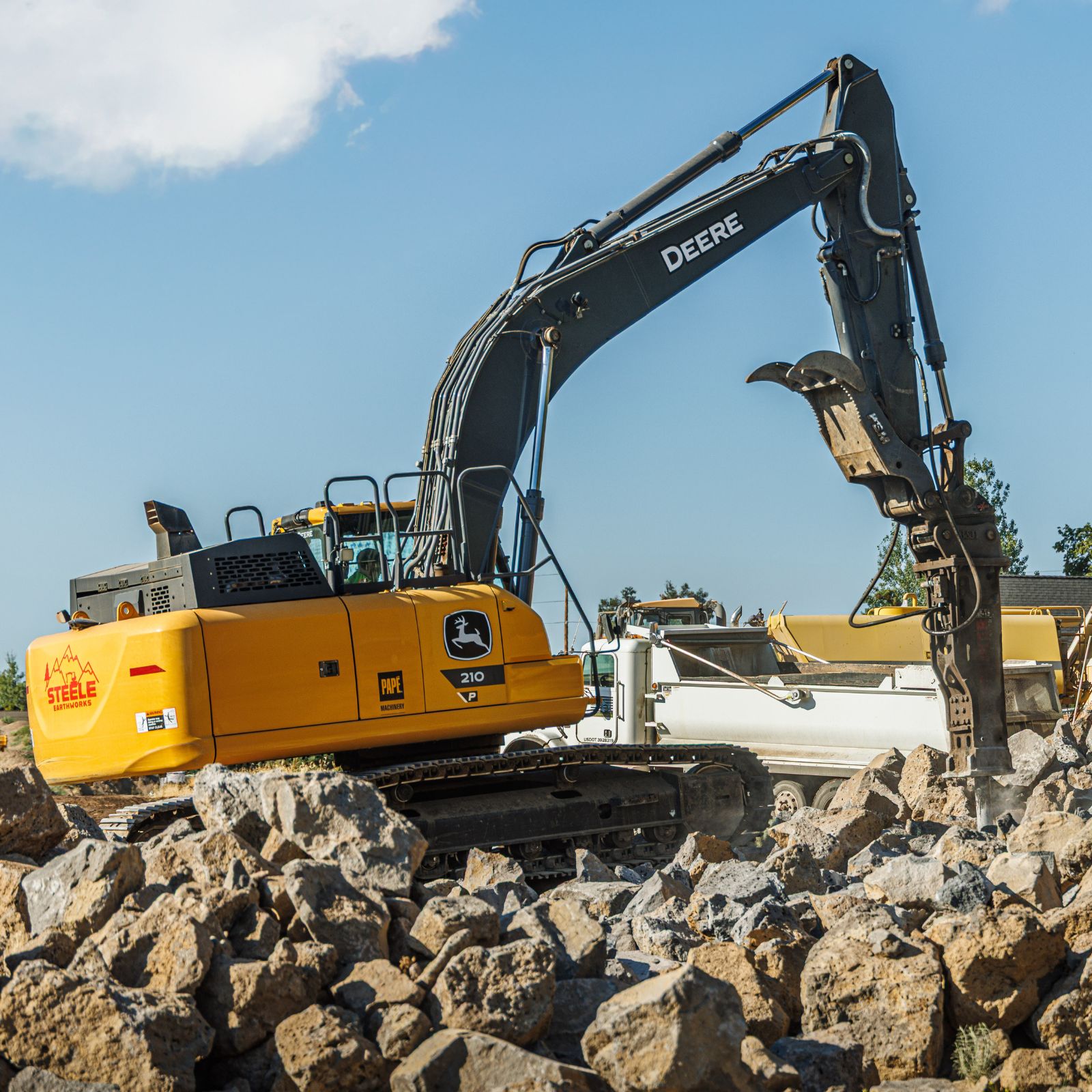
A hydraulic breaker turns an excavator, skid steer, or compact machine into a focused demolition tool, delivering repeatable impact energy to fracture concrete, rock, and other hard material so you can excavate or remove it efficiently.
Papé Machinery Construction & Forestry offers breaker attachments in a range of sizes, from light-duty units for concrete work to heavy-duty breakers built for hard rock and high-production applications.
Why Breaker Attachments Earn Their Keep
A breaker’s superpower is simple: it concentrates your machine’s hydraulic power into controlled, percussive blows. That lets you break material in place, keep debris manageable, and prevent hard material from becoming a bottleneck. Common cases include:
- Demolishing footings, curbs, and small structures
- Reducing oversize rock into haulable pieces
- Opening trenches through hardpan soil
Power Starts With Proper Sizing
The most productive breaker isn’t always the biggest one available. It’s the one matched to your carrier and material. Three points should be considered:
1. Material Hardness and Your Production Target
Soft-to-medium concrete might fracture quickly with a lighter breaker, while hard rock can demand more impact energy. Papé Machinery Construction & Forestry stocks small, medium, and large breakers, including light-duty concrete options and heavy-duty breakers for hard rock.
2. Carrier Compatibility (Hydraulics and Stability)
Breaker performance depends on proper hydraulic flow and pressure. Too much or too little can mean sluggish performance, overheating, or unnecessary wear and tear. Weight matters too: the attachment has to fit the carrier’s operating envelope so you stay stable and avoid beating up the boom, pins, and bushings over a long shift.
This is where a mid-size breaker, such as the Astec BX20, shines. It can be a strong fit when you need enough impact energy (2,000 foot-pounds) for stubborn material without jumping all the way to a high-production rock breaker.
3. Tool Condition and the Reality of Resharpening
Breaker productivity is also dependent on the tool’s point of contact. A dull tool can slow fracture and increase vibration, so it’s smart to factor resharpening fees into your planning.
An Overview of PMCF’s Breaker Lineup
Papé Machinery offers breaker attachments that range from 600 foot-pounds up to 12,000 foot-pounds of impact energy, with weights from 493 to 12,000 lbs. That spread matters because it lets you tailor the tools to the work:
- 600–1,500 foot-pounds: Lighter concrete work and tight-access demolition.
- 2,000–5,000 foot-pounds: A versatile middle range for mixed concrete and medium rock.
- 8,500–12,000 foot-pounds: Hard rock or higher production.
If you’re unsure where your job fits, start with the carrier model, the material you’re breaking, and how much you need done per day.
Operator Habits That Protect Your Breaker and Your Schedule
Breakers are built to withstand wear and tear, but most unplanned downtime comes from a few repeatable mistakes. Four habits that pay off fast:
- Avoid Blank Firing: Firing the breaker with the tool not firmly against the work surface can hammer internal components and accelerate wear.
- Don’t Pry With the Breaker: A breaker is designed for vertical impact, not prying material like a crowbar. Prying can damage tool steel and bushings, and strain the housing.
- Grease and Check Wear Points: Consistent lubrication helps reduce wear and supports steadier performance.
- Control Dust on Concrete and Masonry: Breaking silica-containing materials can generate respirable crystalline silica dust. OSHA highlights wet methods and vacuum dust collection as common engineering controls.
Why Choose Papé Machinery Construction & Forestry for Breaker Attachments?
Whether you need a breaker for one demolition push or you’re looking to outfit a fleet long-term, the advantage is the same: you get the right tool, matched to your carrier, backed by people who can support it after the sale.
Rent When Flexibility Matters
Renting lets you size the breaker to the job and the material without committing capital to an attachment that might sit idle between projects. And Papé Machinery’s rental process is built for fast turnaround: pick the breaker class you need and request availability and pricing through the site or by calling your nearest location.
Buy When the Work Is Recurring
If you’re breaking concrete, trenching through tough material, or scaling production regularly, owning can make more sense. Papé Machinery carries used construction attachments to expand your machine’s capabilities while stretching your budget. Plus, our team can help you choose an attachment that’s appropriate and safe for your carrier and applications.
Get Support Beyond the Attachment
Breakers don’t live in a vacuum, and neither should your plan. Because Papé Machinery Construction & Forestry is a full-service dealer, you can lean on trained technicians for routine maintenance and repairs that keep your machines and attachments working as intended.
Regional Coverage When You’re Running Multiple Sites
If you’re moving between jobs, having local support matters. Papé Machinery Construction & Forestry serves customers throughout the West.
Conclusion
If hard material is slowing down your project, a powerful breaker attachment can be the difference between “we’ll finish next week” and “we’re loading out this afternoon.” Request a breaker attachment rental online or talk with our team about purchase options if breaking is a regular part of your workload.