


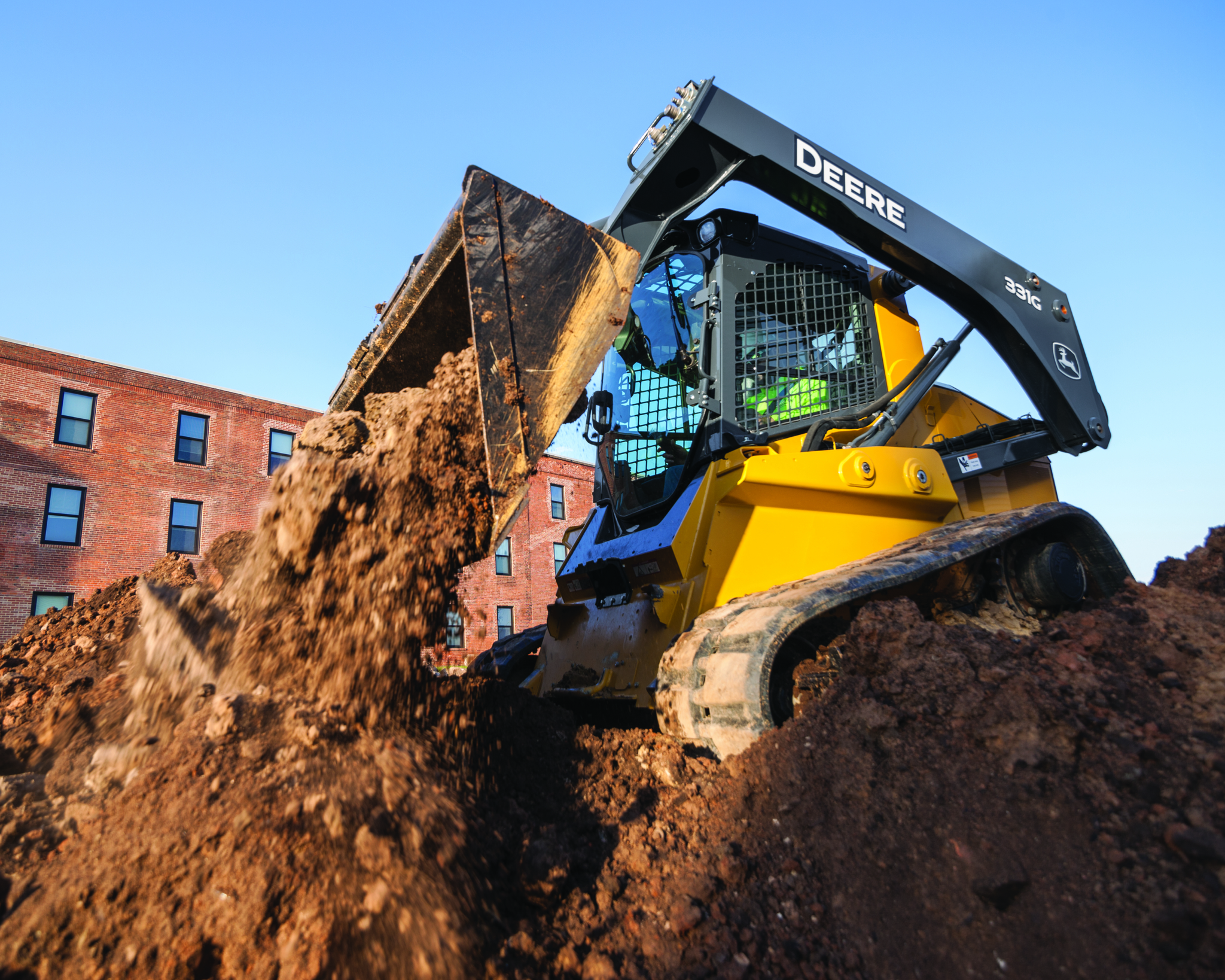
Rubber track replacement on compact track loaders can be a costly repair. Learn what you can do to extend the life of your tracks and reduce downtime on the jobsite.
CTL TRACK INSPECTION & CLEANING TIPS
- Examine tracks daily for cuts or tears perpendicular to the tracks, missing chunks, and uneven wear in the sprocket/roller interface.
- Inspect track tension daily.
- Regularly check tracks for caked on mud and debris which if left unattended can cause premature track and component wear. Cleaning the tracks as needed will extend the life of the tracks and prevent unnecessary repairs.
PROPER TENSIONING IS KEY
Over- or under-tensioning is the leading cause of rubber track failure. “Tight tracks can reduce the amount of wear life by more than 50% over tracks which are properly maintained,” according to John Deere.
Over-tensioned track will increase wear on bearings, track cables, and track frame. It will also negatively impact fuel efficiency because the CTL engine must work harder to turn over tightened track. Under-tensioning will cause the rubber track and wheels to wear faster and can lead to the track slipping off the sprocket during operation, putting all the undercarriage components at risk.
CHECK & ADJUST TRACK SAG
The steps to adjust track tension on most compact or small construction equipment is simple, but double check your operator’s manual for specifics on your equipment’s track adjustment procedure.
Step 1: Bring machine to a complete stop.
Step 2: Dump the bucket and lower the boom to raise the front end of the tracks approximately 8 inches off the ground.
Step 3: Remove debris between the track and the sprocket.
Step 4: On the third roller from the rear of the equipment, measure the distance between the bottom of the roller and the top of the track. (Check your operator’s manual for the proper specifications for your equipment.)
Step 5: If the track needs adjustment, remove cover plate from the frame.
Step 6: Locate grease fitting, attach grease gun and add grease until the track idler extends to bring the track tension within the recommended limits.
Step 7: If track needs to be loosened, turn adjustment valve counterclockwise to allow grease to bleed from the reservoir. When the track is in spec, turn the valve clockwise to tighten.
Step 8: Put the cover plate back on.
Daily inspection and maintenance is especially important because in most cases rubber track repair is not possible. “If there are cuts in a track that run in parallel with the track they are usually okay to operate for some time. Tears or cuts perpendicular to the track usually result in complete track failure at some point. Tracks have steel or fiber belts running the length of the track like a radial tire. If the cords are intact the track will usually last, but if they are severed, failure is imminent,” says Jason Vaughn, General Manager for Papé Machinery.
If for any reason you are having issues with proper tension on your CTL or need a technician to do an undercarriage wear assessment, contact your nearest John Deere dealer.