


June is National Safety Month, an annual National Safety Council observance focused on helping people stay safe “from the workplace to anyplace.” For construction and forestry crews, that message fits the pace and pressure of everyday work.
A safer jobsite starts with preparation. It grows through daily habits, equipment condition, operator awareness, planning, and reliable support. National Safety Month is a timely mid-year reminder to review the systems that help every crew member work with confidence.
A strong jobsite safety plan includes:
- Daily hazard assessments
- Equipment inspections
- Operator training and communication
- Preventive maintenance
- Connected equipment technology
- The right equipment for the job
Start with the Biggest Jobsite Risks
Before the first machine starts up, crews need to be aware of the hazards present on the jobsite.
OSHA cites four major hazard categories: falls, struck-by accidents, caught-in or caught-between hazards, and electrocution. Heavy equipment can play a role in several of these areas, especially when machines, ground crews, trucks, attachments, and changing work zones overlap. A daily hazard assessment should cover:
- Machine traffic patterns and pedestrian zones
- Blind spots, swing radius, backing areas, and haul routes
- Slopes, trenches, overhead lines, and unstable surfaces
- Hand signals, radios, spotter expectations, and stop-work authority
Make Equipment Inspections Part of the Safety Culture
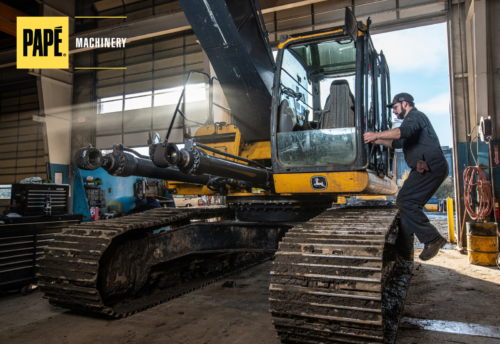
Jobsite safety depends on machine readiness. A walkaround inspection helps operators identify issues that affect safe operation.
Build a consistent pre-shift inspection routine:
- Check fluids, leaks, tires, tracks, brakes, lights, mirrors, cameras, and alarms
- Inspect buckets, blades, couplers, forks, grapples, and other attachments
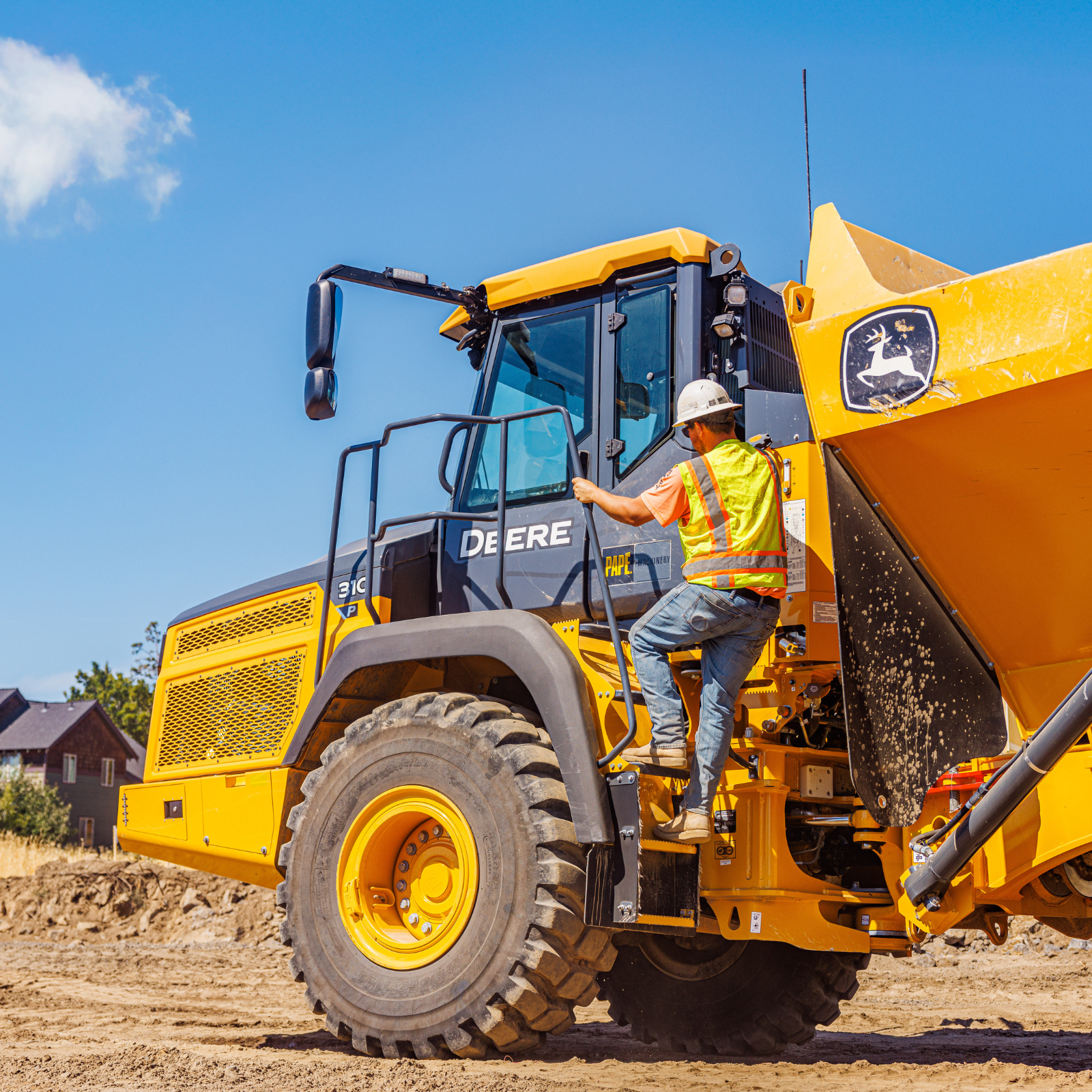
- Confirm that guards, handholds, steps, seat belts, and access points are secure
- Document concerns and remove equipment from service when repairs are needed
Planned preventive maintenance also supports uptime. Expert inspections, scheduled maintenance, fluid sampling, oil analysis, genuine John Deere parts, remote diagnostics, and factory-trained technicians help fleets catch problems earlier and schedule downtime with less disruption.
Use Technology to Support Safer, More Efficient Work
Technology can help operators and fleet managers make better decisions. John Deere Precision Technology Solutions, JDLink Telematics, Dealer Machine Monitoring, Expert Alerts, remote diagnostics, grade control systems, GPS, laser systems, and 2D or 3D machine control help support more precise work and improved equipment visibility.
These tools can help crews reduce unnecessary machine movement, limit rework, monitor machine health, and identify potential issues before they slow production. Technology works best when paired with trained operators and clear jobsite procedures. Training and ongoing support also help teams get the most value from the technology already built into their machines.
Match the Right Machine or Rental to the Job
The right equipment can help reduce shortcuts and improvised workarounds. A machine that is undersized, oversized, poorly matched, or unavailable can create pressure on the crew. During National Safety Month, fleet managers should review whether teams have the right machines, attachments, and backup rental options for the work ahead.
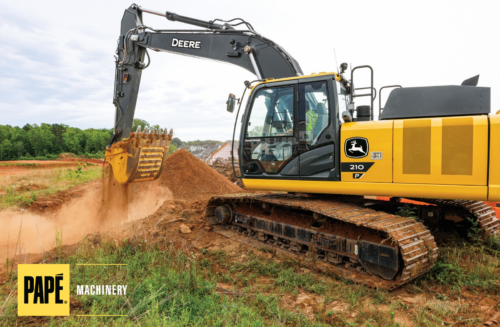
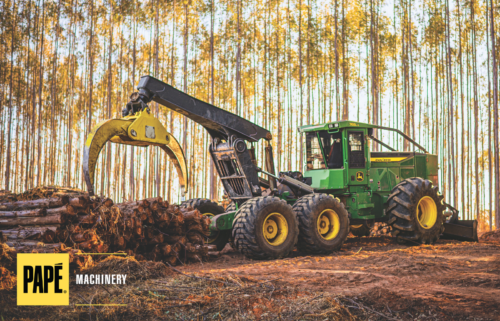
Rental equipment can help fill short-term gaps, support seasonal demand, or match a specific machine to a specific task. Excavators, dozers, loaders, backhoes, articulated dump trucks, compact equipment, attachments, rollers, grade-control tools, and forestry equipment can all help crews stay productive when project needs change.
Reinforce Operator Awareness and Communication
National Safety Month is a good time to refresh expectations around operators, spotters, truck drivers, laborers, and subcontractors working near active machines. Focus on daily behaviors that keep people aligned:
- Review blind spots before equipment enters the work area
- Keep people clear of swing radius, pinch points, and travel paths
- Use agreed-upon hand signals or radio procedures
- Make eye contact between operators and spotters when practical
- Keep phones and other distractions away from active work zones
- Encourage every crew member to speak up when conditions feel unsafe
A strong safety culture depends on shared awareness. Operators need room to work. Ground crews need predictable communication. Supervisors need to reinforce the plan throughout the day.
Keep Maintenance Records and Plan Ahead
Good records turn inspections and service into long-term fleet insight. Use National Safety Month as a mid-year check-in to review open service items, recurring issues, inspection notes, and repair history.
Look for patterns. Repeated attachment damage may point to an application issue. Frequent alerts on one machine may call for a deeper inspection. Similar wear across a fleet may highlight an operator training opportunity or a jobsite planning concern.
Maintenance records, oil-analysis history, and repair documentation can support safer operation, longer machine life, stronger resale value, and better scheduling. Planning ahead also helps crews avoid surprise breakdowns during high-production periods.
Keep Safety a Priority Year-Round
A safer worksite is built through preparation, reliable equipment, informed operators, and dependable service resources. National Safety Month is a valuable reminder to review inspections, reinforce communication practices, evaluate fleet technology, and schedule preventive maintenance before issues affect productivity.
Contact your nearest Papé Machinery Construction & Forestry team to explore equipment, service, technology, and rental solutions designed to help support safer and more productive operations.